Launch offer — valid today only

📄 Digital book in PDF · read it on your phone or print it

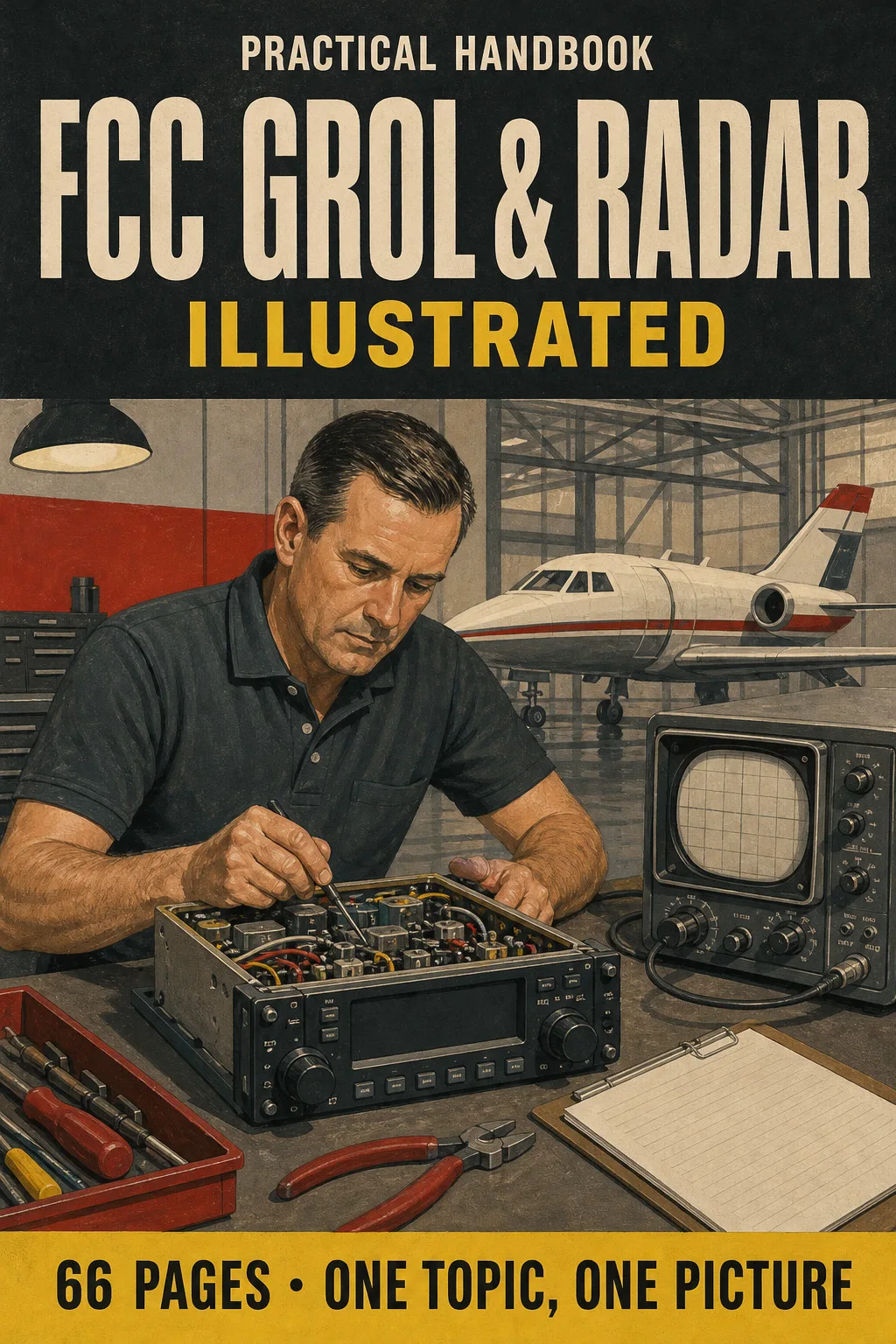
FCC GROL Elements 1, 3 and 8 in Drawings Every Circuit on Its Own Page

Not another question pool. Reactance, resonance, op-amps, antennas and SWR, FCC rules, VOR and ILS, ship radar: each topic on its own page, the drawing first, then the worked example, so you see where the answer comes from. 66 illustrated pages.

START STUDYING THIS WAY

🔒 Secure checkout · PDF by email · 30-day guarantee

Every topic, its own pageEach circuit and rule drawn, with the explanation right beside it
66 illustrated pages9 parts, from what each Element covers to the exam-day checklist
Up-to-date sources47 CFR Parts 13, 80 and 87, plus the current FCC question pools
PDF by emailFormat

Look Inside the Book

Every page has one big drawing and a box with the formulas and numbers you need to know:

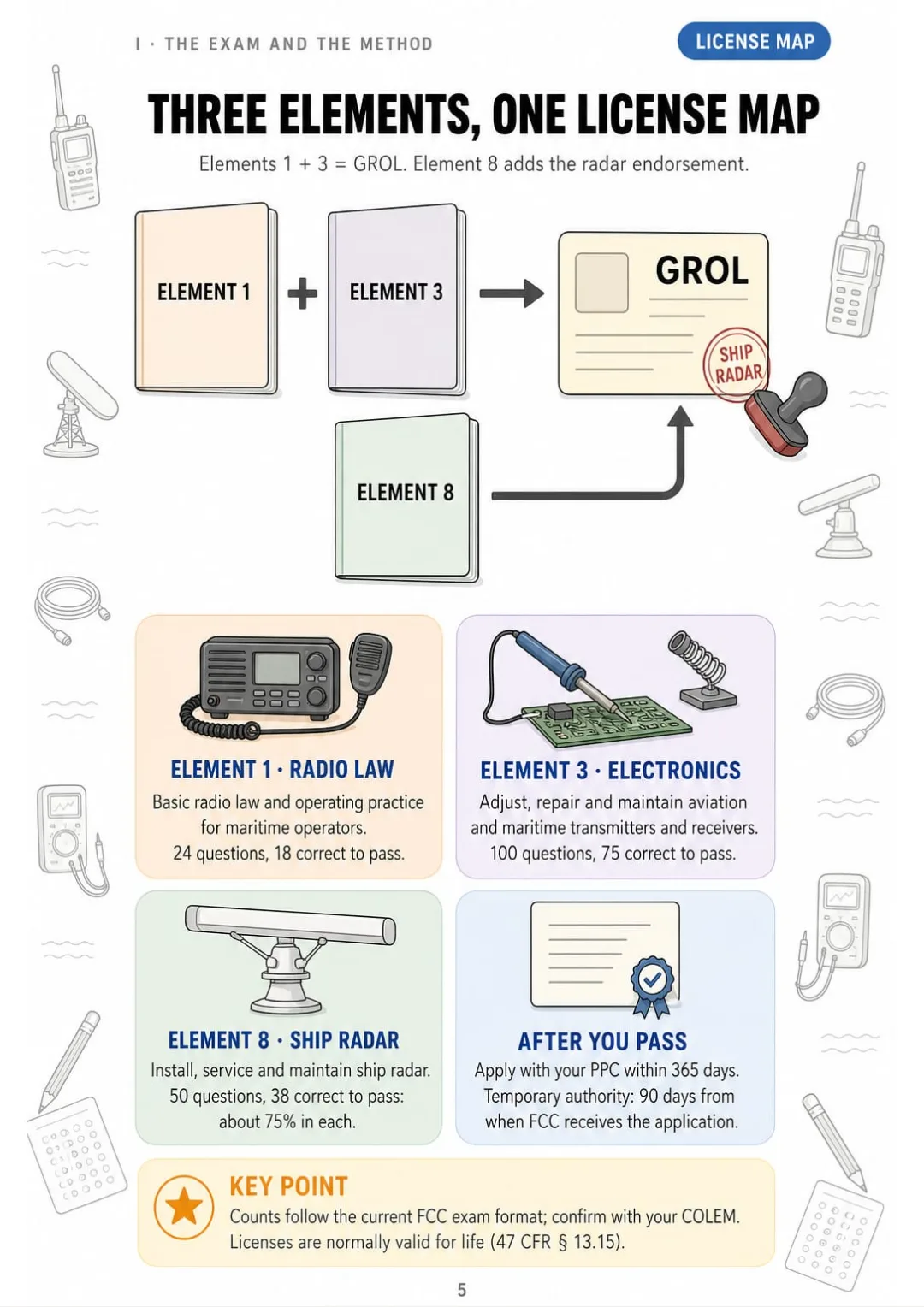
Element 1: 24 q / 18 · Element 3: 100 q / 75 · Element 8: 50 q / 38 to pass
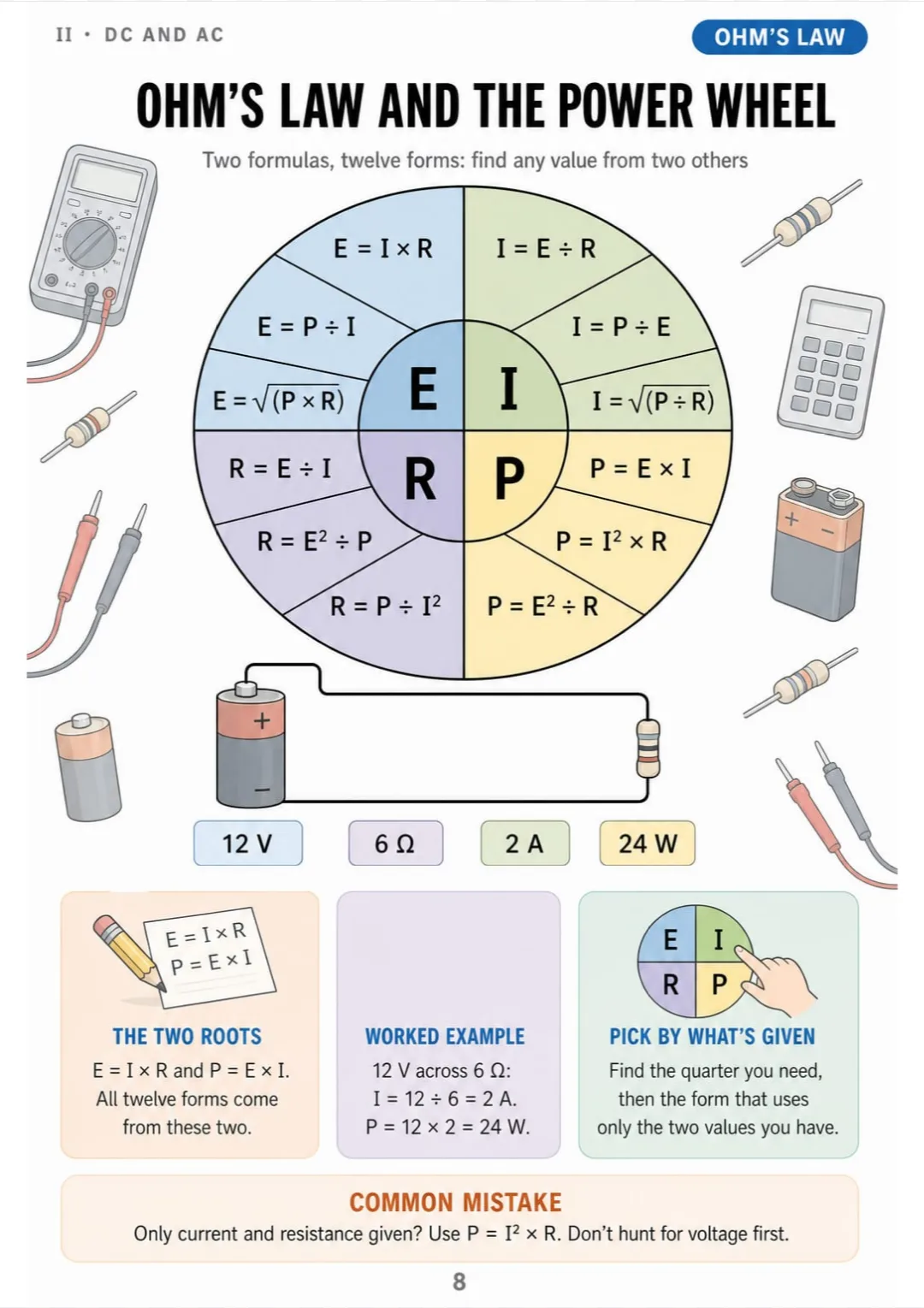
12 V across 6 Ω = 2 A and 24 W, solved from one wheel
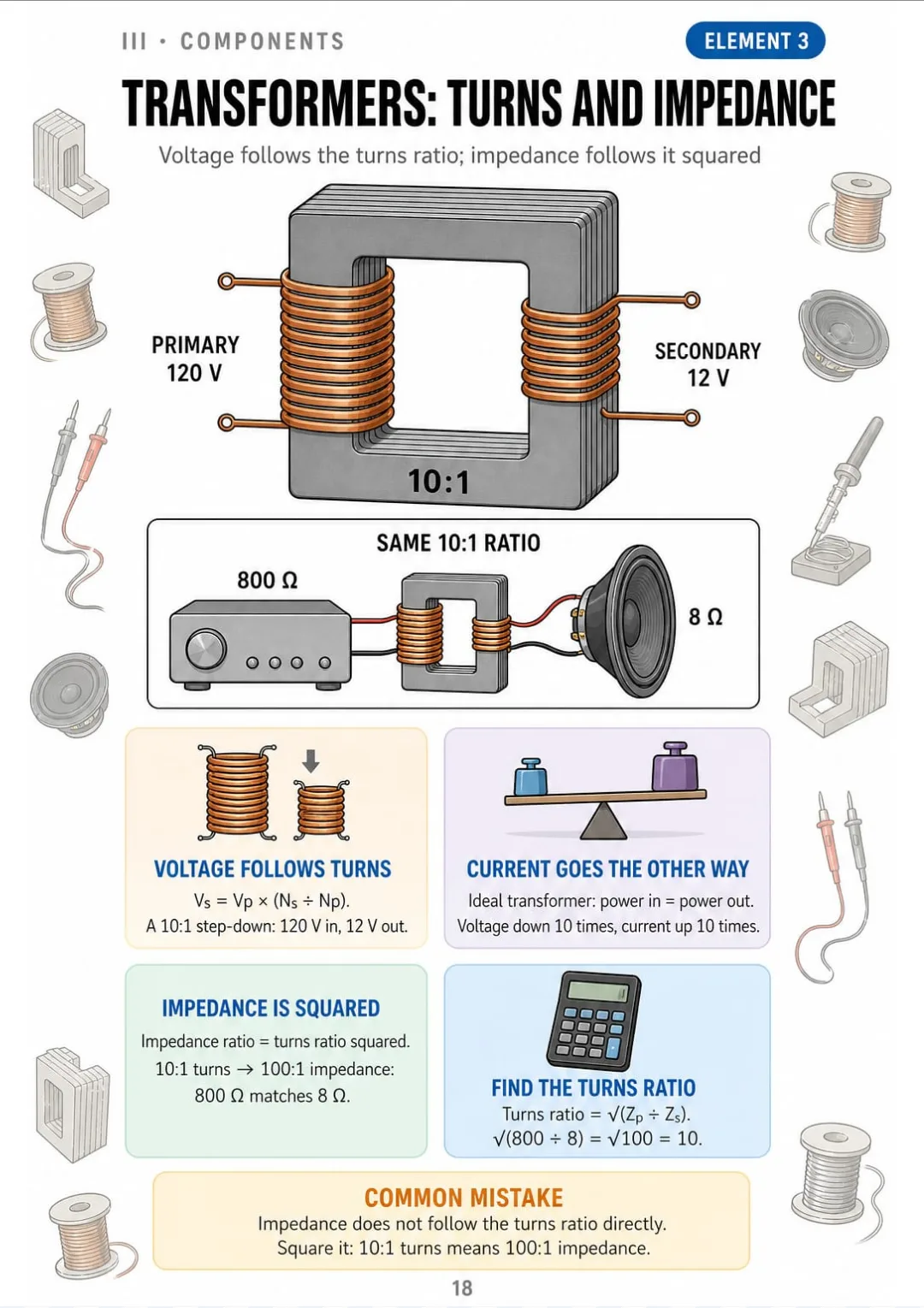
10:1 transformer: 120 V → 12 V, and 800 Ω matched to 8 Ω (100:1).
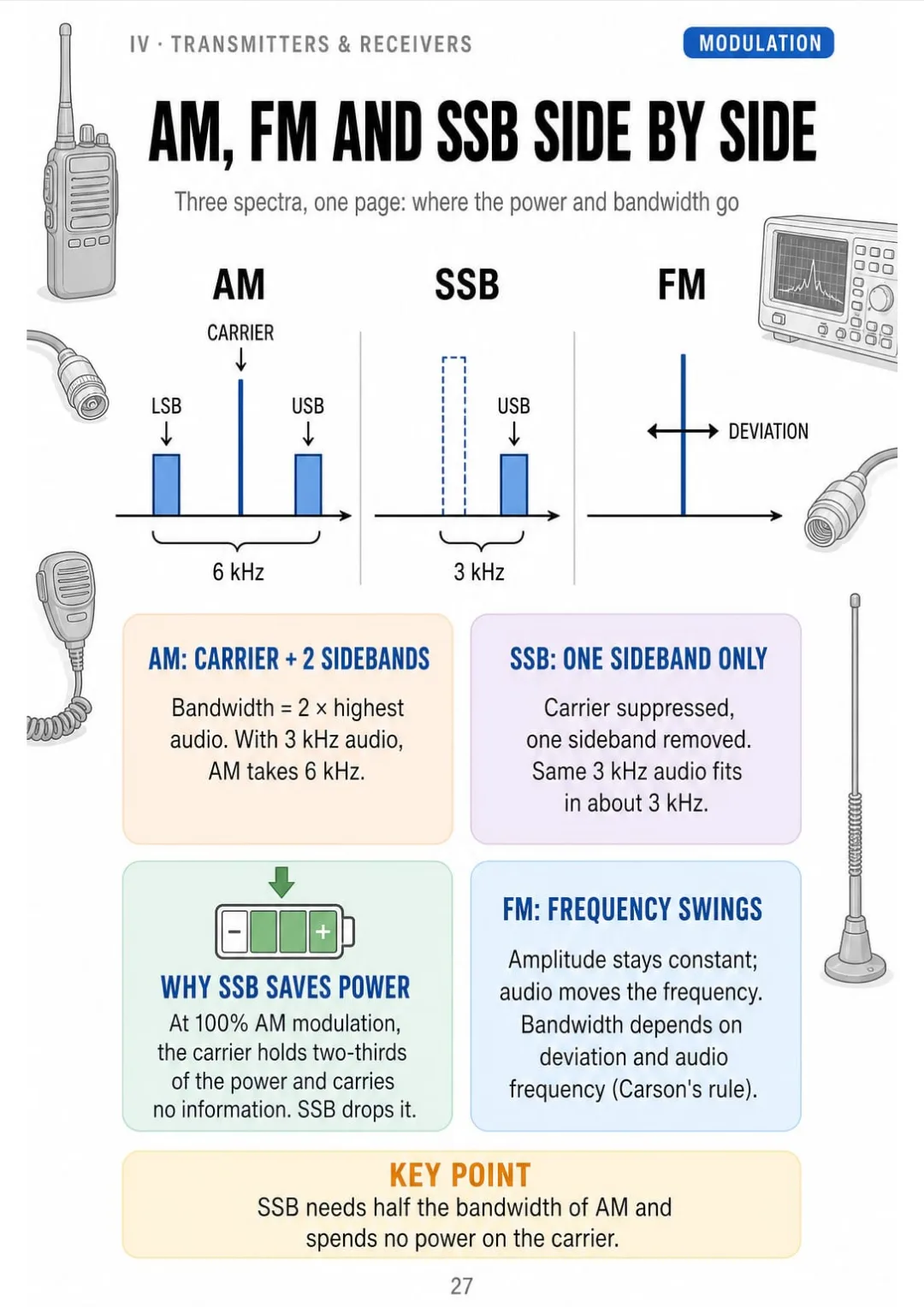
AM = 6 kHz, SSB = 3 kHz for the same 3 kHz audio: the carrier is the difference.
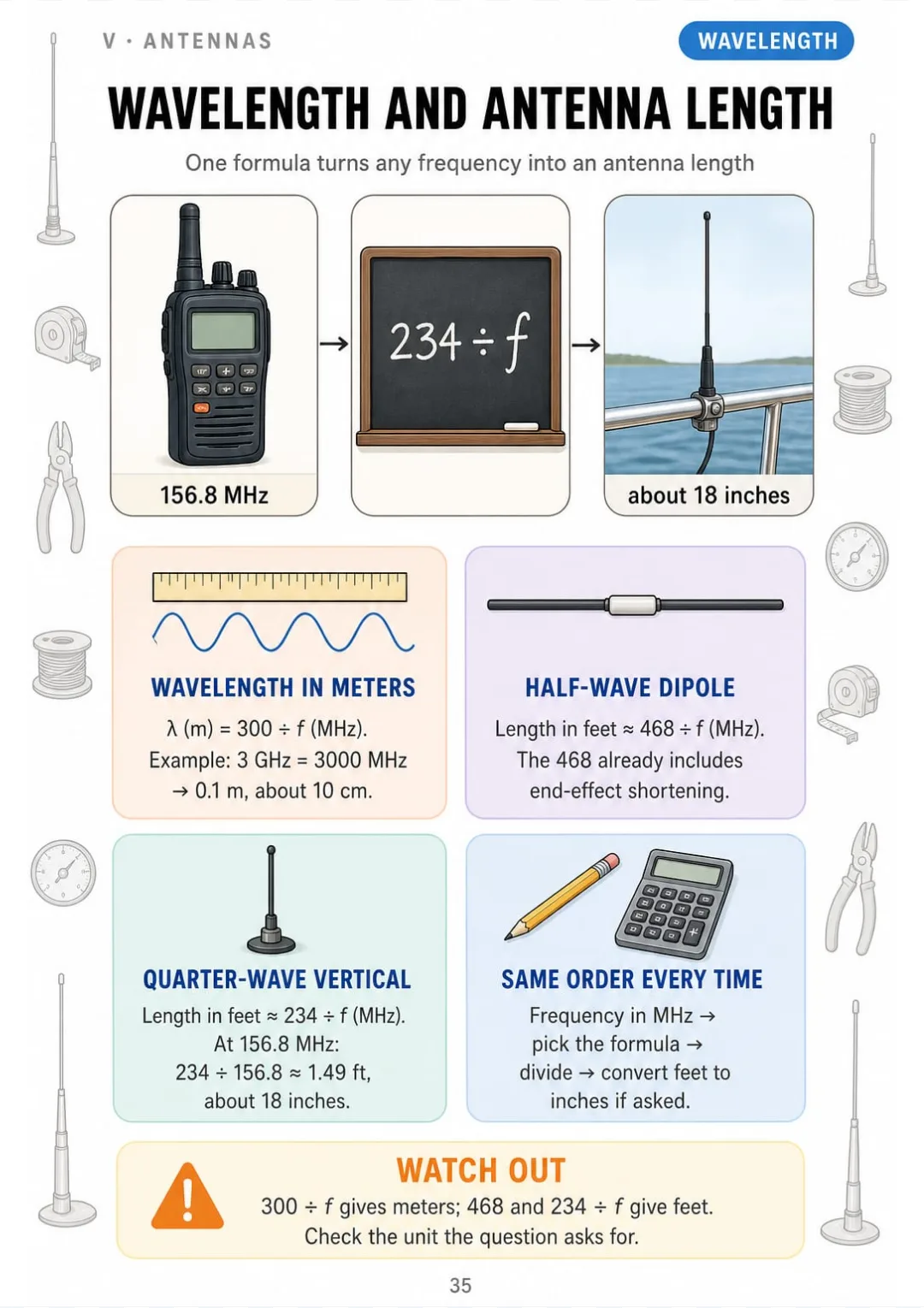
Quarter-wave at 156.8 MHz: 234 ÷ 156.8 ≈ 1.49 ft, about 18 inches.
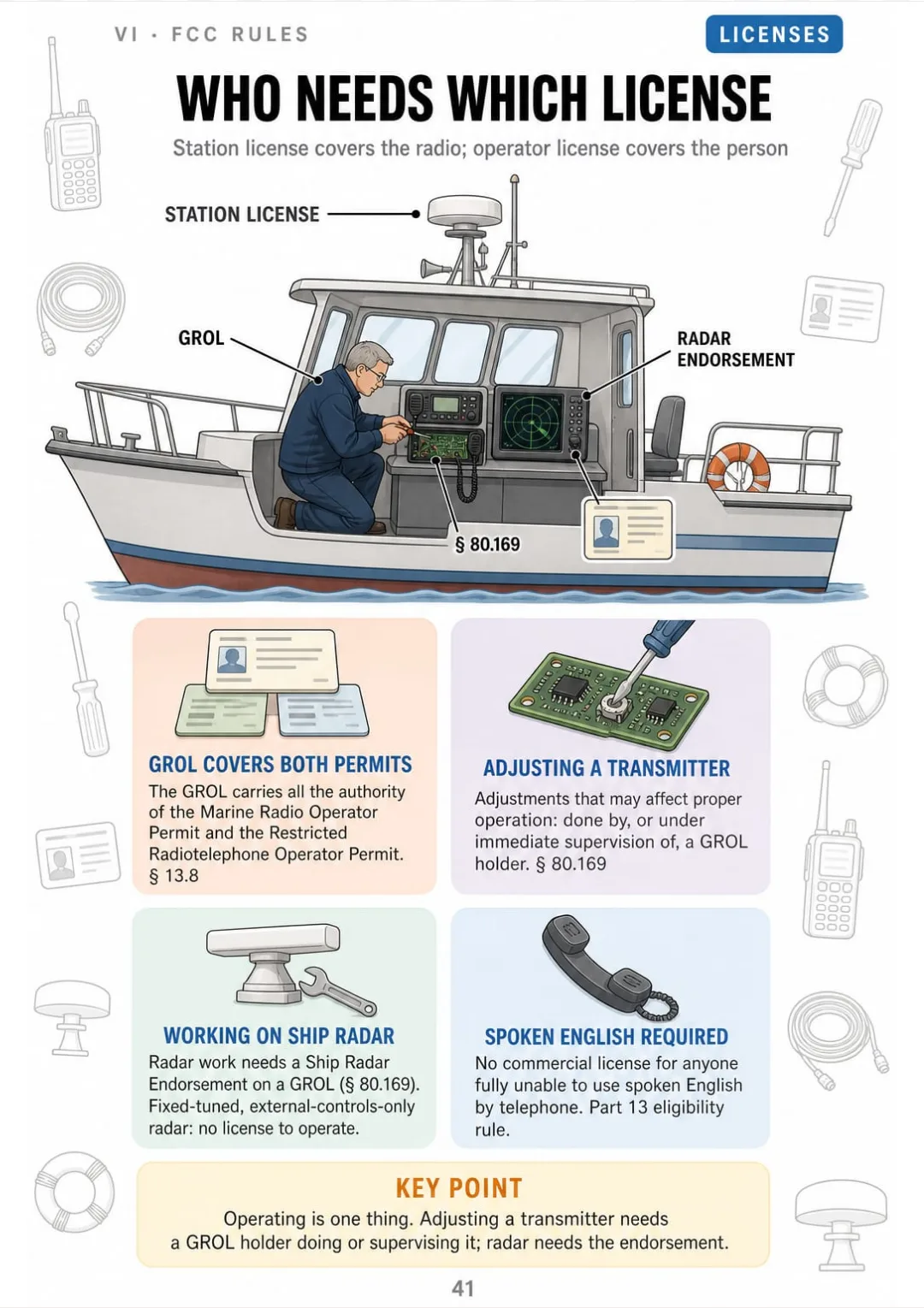
GROL to adjust transmitters, Radar Endorsement to service radar (§ 80.169).
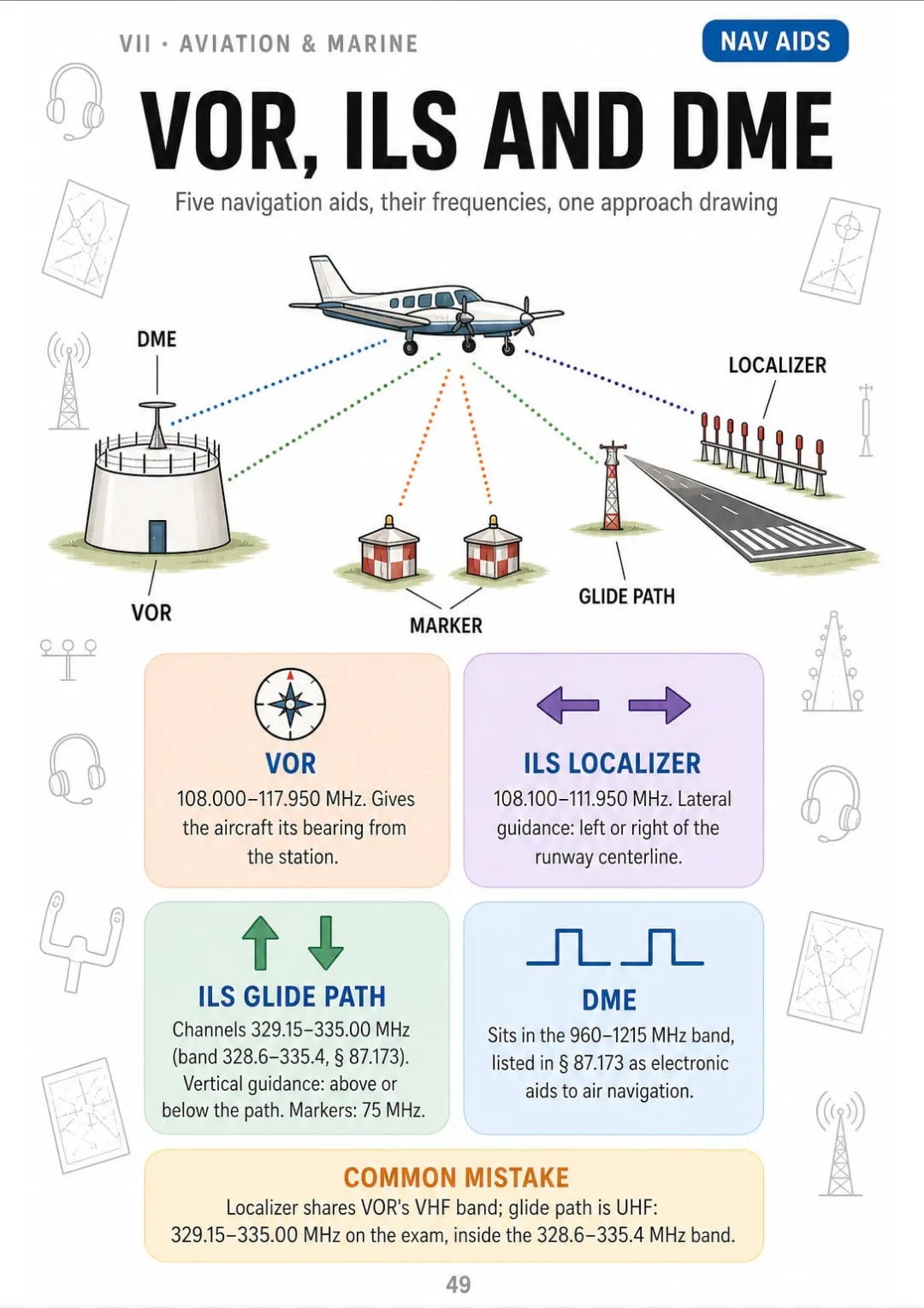
VOR 108–117.95 MHz · Localizer 108.1–111.95 MHz · Glide path 329.15–335 MHz · Markers 75 MHz
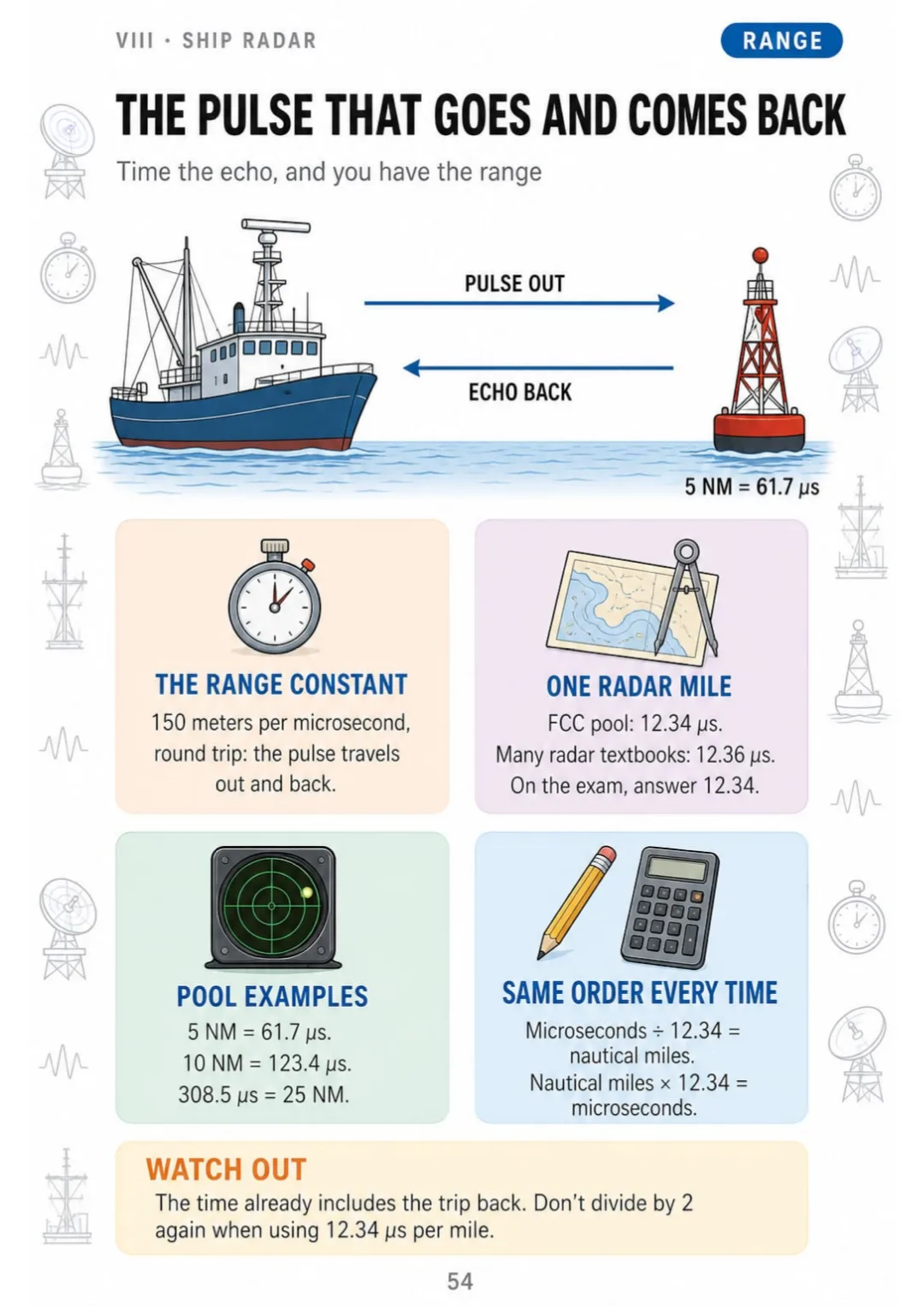
One radar mile = 12.34 µs in the FCC pool: 5 NM = 61.7 µs, 25 NM = 308.5 µs.

Swipe to see more →

These are real pages from the book. The table of contents is the full one: 9 parts and 62 topics.

The Problem Isn't You. It's How It Was Explained.

You're looking at an Element 3 question about a 10:1 transformer, and it asks for the impedance ratio. You've wired transformers for years, and you still freeze.

The study guide gives you a paragraph: turns ratio, voltage ratio, impedance ratio, squared, inverse. Words on top of words, and no picture of what the windings are doing. So you pick 10:1, and it's wrong.

10:1 transformer: 120 V → 12 V, and 800 Ω matched to 8 Ω (100:1).

In this book, the transformer is one page. Ten turns on one side, one on the other: 120 V goes in, 12 V comes out, and 800 Ω on the primary looks like 8 Ω on the secondary. The square is right there in the drawing: 10 × 10 = 100.

Same thing with reactance, resonance, SWR, the superheterodyne receiver and the radar pulse: each one gets its own page and its own drawing.

You see why the answer is 100:1, and you get it right without going back to the guide. On to the next question.

COMPARE FOR YOURSELF

The Same Topic, Two Ways to Study It

THIS
  • The study guide: line after line
  • Resonance explained only in words
  • You walk into the exam unsure
Resonance in a series LC circuit occurs at the frequency at which the inductive reactance, given by XL = 2πfL, becomes equal in magnitude to the capacitive reactance, given by XC = 1/(2πfC), such that the two reactances cancel and the impedance of the circuit is reduced to its resistive component alone; accordingly, the resonant frequency may be derived as f = 1/(2π√(LC)), and at this frequency the current through the circuit reaches its maximum value.
FOR THIS
  • XL and XC crossing at resonance, in one drawing
  • The formulas in one box
  • You see it and you get it
12 V across 6 Ω = 2 A and 24 W, solved from one wheel
CONTENTS

Take a Look at the 9 Parts and 62 Topics

The exam and the method, DC and AC, components, transmitters and receivers, antennas, FCC rules, aviation and marine gear, ship radar and exam-day review: 66 pages, all illustrated.

IThe Exam and the Method · pp. 5-7
  1. GROL, Radar Endorsement: What Each Element Covers
  2. How to Use This Book: Principle First, Question Second
  3. Every Calculation in the Same Order
IIDC and AC Refresher · pp. 8-17
  1. Ohm's Law and the Power Wheel
  2. Series and Parallel Resistors
  3. Peak, Peak-to-Peak, RMS and Average
  4. Inductive Reactance: X sub L
  5. Capacitive Reactance: X sub C
  6. Impedance Is Not Reactance
  7. Resonance: Where XL Equals XC
  8. Q, Bandwidth and Selectivity
  9. RC and RL Time Constants
  10. Decibels Without Fear
IIIComponents and Circuits · pp. 18-26
  1. Transformers: Turns Ratio and Impedance
  2. Diodes, Zeners and Rectifiers
  3. Bipolar Transistors: NPN and PNP
  4. FETs and MOSFETs
  5. Amplifier Classes A, AB, B and C
  6. Operational Amplifiers
  7. Oscillators and Crystals
  8. Digital Logic Gates and Counters
  9. Power Supplies and Batteries
IVTransmitters, Receivers and Modulation · pp. 27-34
  1. AM, FM and SSB Side by Side
  2. FM Deviation, Modulation Index and Carson's Rule
  3. The AM and SSB Transmitter Chain
  4. The FM Transmitter Chain
  5. The Superheterodyne Receiver
  6. Selectivity, Sensitivity and Squelch
  7. Detectors and Discriminators
  8. Spurious Emissions, Harmonics and Interference
VAntennas and Transmission Lines · pp. 35-40
  1. Wavelength and Antenna Length
  2. Dipoles, Verticals and Ground Planes
  3. Antenna Gain, ERP and Polarization
  4. Coax, Characteristic Impedance and Velocity Factor
  5. SWR: The Wave That Comes Back
  6. Quarter-Wave Stubs and Matching
VIFCC Rules: Element 1 · pp. 41-48
  1. Who Needs a License and Which One
  2. Distress, Urgency and Safety: Mayday, Pan-Pan, Sécurité
  3. Key Frequencies to Know Cold
  4. Station Identification and Calling Procedure
  5. Secrecy of Communications and Prohibited Transmissions
  6. DSC, MMSI and GMDSS in Plain Words
  7. Logs, Inspections and Station Documents
  8. Power Limits and Technical Rules on Marine VHF
VIIAviation and Marine Equipment · pp. 49-53
  1. VOR, ILS and DME
  2. Transponders, ELTs and Aircraft Radios
  3. EPIRB, SART and NAVTEX
  4. Installation, Grounding and Lightning Protection
  5. Test Equipment on the Bench
VIIIShip Radar: Element 8 · pp. 54-62
  1. The Pulse That Goes and Comes Back
  2. Pulse Width, PRF and Minimum Range
  3. X-Band and S-Band
  4. Inside the Transmitter: Modulator and Magnetron
  5. Duplexer, TR Cell and Waveguide
  6. The Radar Receiver: Mixer, Local Oscillator and AFC
  7. Antenna, Beamwidth and Bearing Resolution
  8. Display Controls: Gain, Sea Clutter and Rain Clutter
  9. ARPA, Interference and Radar Safety
IXReview Before Exam Day · pp. 63-66
  1. The Formula Page
  2. Most Common Mix-Ups
  3. Numbers to Know by Heart
  4. Exam-Day Checklist

One Page, One Topic, All Clear

Think of it this way:

You're in the exam and the question says the echo came back in 61.8 microseconds. Or you're on a boat where the radar puts targets in the wrong place. You need the range, and you need it now.

You open the page on the radar pulse. You see the pulse leave the antenna, hit the target and come back, with one radar mile marked as 12.36 µs out and back. 61.8 ÷ 12.36 = 5 nautical miles.

Quarter-wave at 156.8 MHz: 234 ÷ 156.8 ≈ 1.49 ft, about 18 inches.

The 10:1 transformer, the quarter wave on channel 16, the Mayday call: each one has its page, so you know exactly where to look.

FCC GROL & Radar Illustrated is 9 parts and 62 topics, all drawn, with a formula page, the most common mix-ups and an exam-day checklist at the end.

What you see drawn, you don't have to memorize.

What's Inside FCC GROL & Radar Illustrated:

Ipp. 5-7

The Exam and the Method

What Elements 1, 3 and 8 cover, how to use the book and the one order every calculation follows: data, formula, number with units.

IIpp. 8-17

DC and AC Refresher

Ohm's law and the power wheel, series and parallel, peak vs. RMS, reactance, impedance, resonance, Q, time constants and decibels.

IIIpp. 18-26

Components and Circuits

Transformers, diodes and zeners, BJTs and FETs, amplifier classes, op-amps, oscillators and crystals, logic gates and power supplies.

IVpp. 27-34

Transmitters, Receivers and Modulation

AM, FM and SSB side by side, deviation and Carson's rule, transmitter chains, the superhet receiver, squelch, detectors and spurious emissions.

Vpp. 35-40

Antennas and Transmission Lines

Wavelength and antenna length, dipoles and ground planes, gain and ERP, coax and velocity factor, SWR and quarter-wave stubs.

VIpp. 41-48

FCC Rules: Element 1

Who needs which license, Mayday, Pan-Pan and Sécurité, key frequencies, ID and calling, secrecy, DSC and MMSI, logs and marine VHF power rules.

VIIpp. 49-53

Aviation and Marine Equipment

VOR, ILS and DME, transponders and ELTs, EPIRB, SART and NAVTEX, grounding and lightning protection, and test equipment on the bench.

VIIIpp. 54-62

Ship Radar: Element 8

The radar pulse and the radar mile, pulse width and PRF, X- and S-band, magnetron, duplexer and waveguide, receiver and AFC, antenna, display controls and ARPA.

IXpp. 63-66

Review Before Exam Day

The formula page, the most common mix-ups, the numbers to know by heart and an exam-day checklist.

At the end of the book: A formula page, the most common mix-ups, numbers to know by heart and an exam-day checklist.
Plus: 2 Free Books

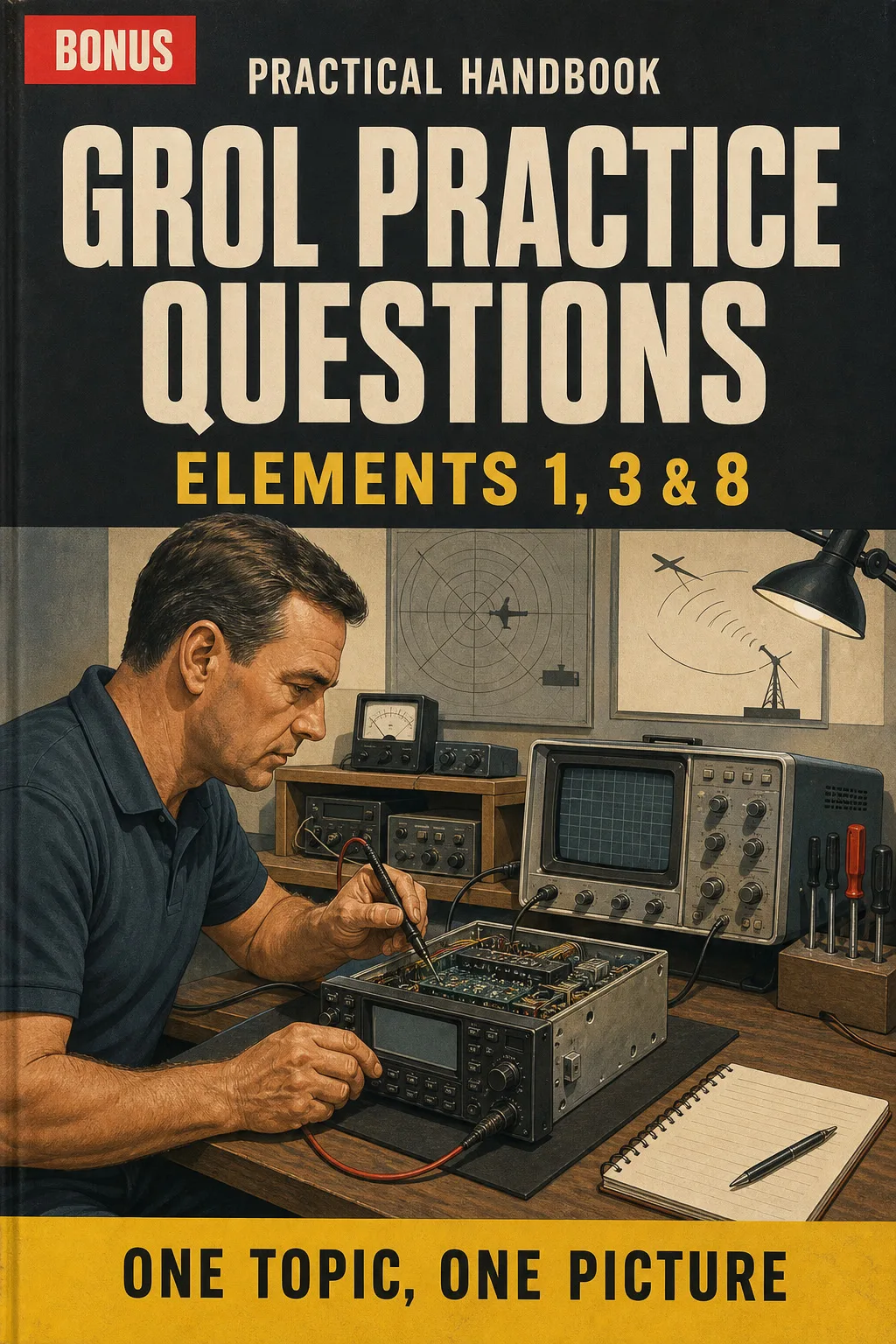
GROL Practice Questions: Elements 1, 3 & 8

BONUS 1: «GROL Practice Questions: Elements 1, 3 & 8»

Value on its own: US$ 17.90

Exam-style questions for every section of the book, with the answer and a one-line reason, so you find your weak topics before exam day.

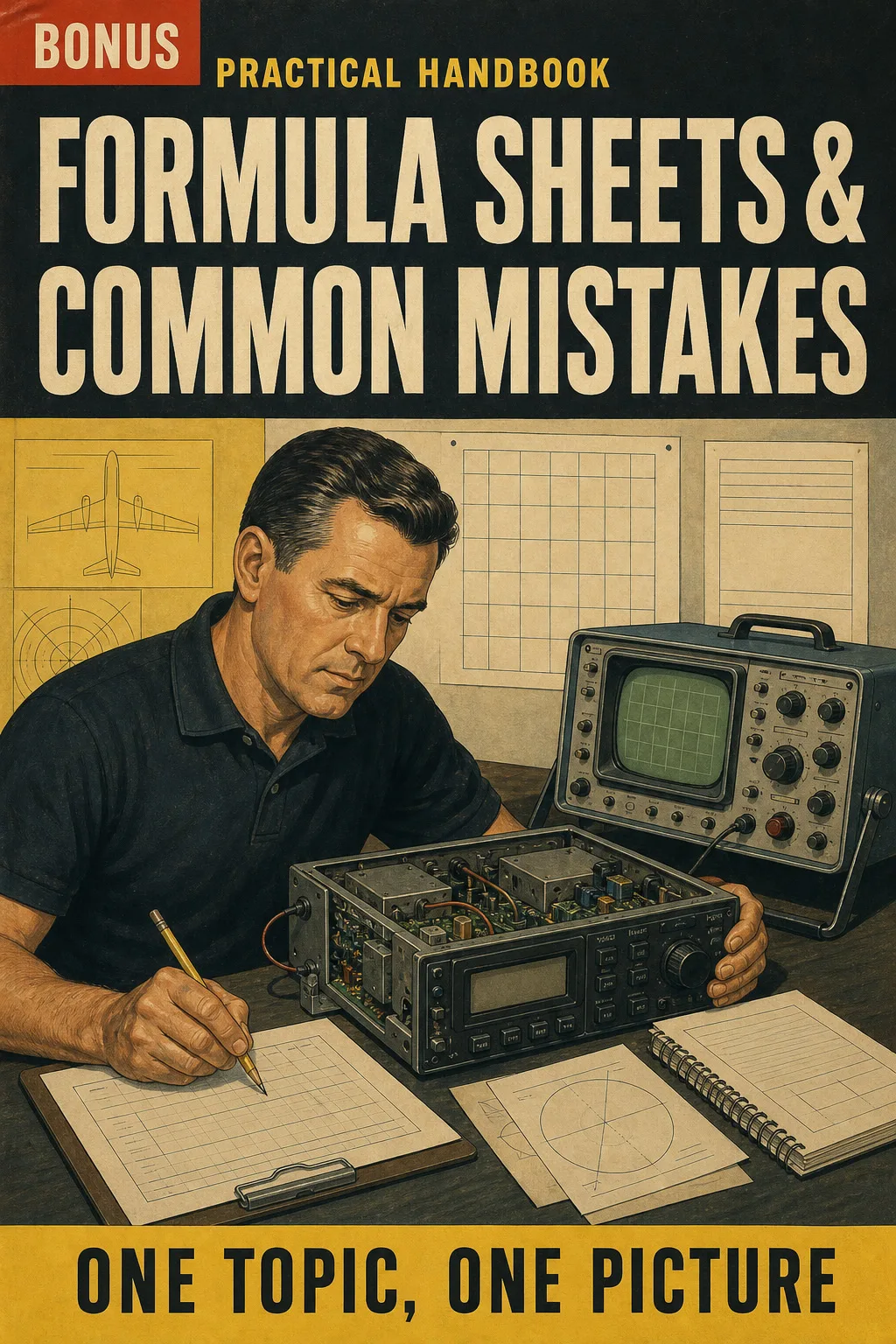
Formula Sheets & Common Mistakes

BONUS 2: «Formula Sheets & Common Mistakes»

Value on its own: US$ 14.90

Every formula from the book on a few printable pages, plus the most common mix-ups (reactance vs. impedance, peak vs. RMS, radar mile timing) so you can review at a glance.

FCC GROL & Radar Illustrated with 2 Free Books

  • FCC GROL & Radar Illustrated: 66 illustrated pagesUS$ 63
  • BONUS 1: GROL Practice Questions: Elements 1, 3 & 8US$ 17.90
  • BONUS 2: Formula Sheets & Common MistakesUS$ 14.90
  • High-resolution PDF to printIncluded
Total value US$ 95.80
YOUR PRICE:
US$ 27
You save US$ 68.80
YES, I WANT FCC GROL & RADAR ILLUSTRATED FOR US$ 27

📄 This is a digital PDF book sent to your email: nothing is printed or shipped.

Secure purchaseEncrypted payment30-day guarantee

PDF by email: We email you FCC GROL & Radar Illustrated as a PDF, together with the two free books. It's a single payment: no installments, no extra charges.

Who This Book Is For

You're brushing up on electronics

You're brushing up on electronics

Reactance, resonance and op-amps come back one page at a time, each with a drawing, so you understand the question instead of memorizing the letter.

Your exam date is set

Your exam date is set

The review part puts every formula, the most common mix-ups and the numbers to know on a few pages you can go over the night before.

You already work on radios

You already work on radios

Print the pages you need and keep them on the bench: SWR, antenna length, FCC rules and radar timing, ready to check at a glance.

Everything You Get Today

US$ 95.80US$ 27
YES, I WANT FCC GROL & RADAR ILLUSTRATED FOR US$ 27

📄 This is a digital PDF book sent to your email: nothing is printed or shipped.

30DAYS
GUARANTEE

30-Day Guarantee

Try FCC GROL & Radar Illustrated for 30 days, bonus books included.

We refund everything if the file won't open, if the book isn't what you see here, if you were charged twice or if the email doesn't arrive. Just email us.

You pay once. No subscriptions.

Frequently Asked Questions

Is it for me if I've been fixing radios for years but haven't opened a textbook since school?

Yes. It isn't a beginner's book: each topic is one page, so you refresh what you already know and spend your time where the exam asks for it.

Where does the content come from?

From the FCC rules in 47 CFR (Parts 13, 80 and 87) and the current FCC commercial question pools for Elements 1, 3 and 8. Every rule number is marked so you can check it against the current edition at eCFR.gov.

Is this official material?

No. It's an independent study book, not affiliated with or approved by the FCC or any COLEM (the FCC-authorized examiners who give the GROL and radar exams). It doesn't give you a license or certificate: the FCC issues those after you pass the exam with a COLEM.

Does it replace a course or hands-on training?

No. It helps you understand and review the theory behind the exam. It doesn't replace formal training or bench experience.

Are the practice questions the ones on the exam?

No. They're exam-style questions written for this book, each with the answer and a one-line reason, so you can find your weak topics.

When and how do I get it?

The book and the 2 bonus books come as PDFs by email, to the address you enter at checkout.

Do I have to pay every month?

No. It's a one-time payment. No subscription.

Can I have it on paper?

Yes. The PDF is ready to print, so you can print the whole book or just the pages you want on the bench.

How does the refund work?

You have 30 days. We refund everything if the file won't open, if the book isn't what you see on this page, if you were charged twice or if the email doesn't arrive: just email us.

Before You Close This Page

No more rereading question pools with nothing sticking.

Transformers, SWR and the radar pulse: you see them drawn, and that's it.

You walk into the exam knowing where everything is.

Drawings make studying faster.

The book is right below.

One-time payment: US$ 27 · Guarantee: 30 days · PDF by email

YES, I WANT FCC GROL & RADAR ILLUSTRATED FOR US$ 27

📄 This is a digital PDF book sent to your email: nothing is printed or shipped.